Telematics continues to play a central role in on-road and logistics operations, enabling real-time connectivity, visibility and efficiency across fleet management. As legacy networks are phased out and connectivity standards evolve, many businesses are reassessing their telematics technology stack to ensure continuity, performance and future readiness.
In this article, we explore the role of telematics in modern fleet management, the implications of network transitions, and how upgrading to next-generation solutions can unlock greater operational efficiency, data accuracy, and long-term value.
The importance of telematics in fleet management
Every vehicle operating on public roads should form part of a connected fleet and asset management strategy. As road transport remains the backbone of most logistics operations, maintaining reliable, future-ready connectivity is essential to keeping fleets visible, compliant, and efficient.
With legacy networks being retired, businesses relying on older telematics infrastructure face increasing risks: from data gaps to reduced device functionality. This shift is prompting many organisations to assess how well their current systems support ongoing operational demands.
Upgrading to 4G and 5G-enabled telematics is about more than maintaining connectivity. It enables faster, more reliable data transmission, supporting real-time fleet visibility, proactive maintenance, and stronger safety outcomes. The integration of GPS tracking advanced tools (such as road-facing and driver-facing cameras, along with additional sensors) further enhances monitoring and risk management capabilities.
Ultimately, modernising telematics infrastructure positions businesses to improve operational efficiency, strengthen asset safety and compliance and reduce the risks associated with ageing technology.

Upgrading to the 4G network for telematic devices not only guarantees continuous connectivity but also unlocks a wide range of advantages.
Fleet management telematics for road vehicles
Different telematics devices offer varying levels of data. Some provide detailed engine data, while others focus more on driver behaviour and fuel reduction. There are many operational benefits to gain, too, from geofencing and virtual boundaries to usage permissions and restrictions (that you can control remotely!).
When considering the best telematics in logistics and transportation for your business, consider:
- The data you need for governance, maintenance and safety
- The data you need for optimal operational performance and profitability
- Your budget
The different types of telematics in logistics and transportation
Original Equipment Manufacturer (OEM)
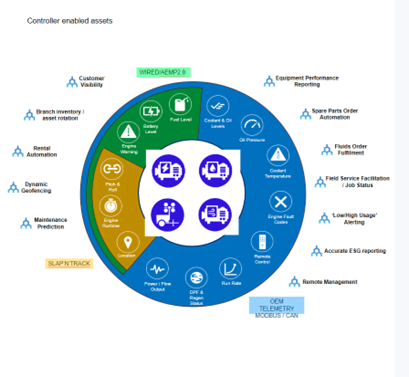
OEM telemetry solutions are seamlessly integrated into vehicles during manufacturing. Widely adopted in contemporary cars and trucks, these solutions provide an extensive dataset and real-time fleet monitoring, however to date this has been restricted to providing data back to the manufacturer. The advent of electric vehicles and their corresponding ‘app’ ecosystem is increasingly making this data relevant to end users, and systems are slowly opening up to be leveraged.
OBD-read diagnostics
OBD-reading devices are the most common form factor for on-road telematics. They leverage the existing diagnostics port of the vehicle to read the data from the on board computer. Designed to be compatible across different vehicle types, OBD-based telematics provide valuable fault codes based on mappings maintained by the telemetry provider. These solutions can be upgraded to provide further hardware solutions like camera, driver identification modules and sometimes bluetooth or wired sensing. This capability allows for proactive maintenance, reducing downtime and enhancing the reliability of on-road fleets.
Wired Telematics
On-road vehicles, including cars and trucks, benefit from wired telematics systems that directly interface with the vehicle’s electrical wiring. This approach ensures a reliable and durable solution, providing essential data points such as fluid levels and engine diagnostics, but requiring a longer installation. These solutions can be upgraded to provide further hardware solutions like camera, driver identification modules and sometimes bluetooth or wired sensing. The result is improved maintenance planning and heightened operational reliability for on-road fleets.
Slap ‘n’ Track
Slap ‘n’ Track telemetry can also be used for on-road vehicles, providing a simple, cost-effective and easily removable solution for monitoring asset tracking. Whether applied to cars or trucks, or more likely trailers or other attachments, this solution provides a streamlined approach to telematics integration, offering valuable insights into the real-time location and status of on-road vehicles.
Leveraging telematics for strategic advantages
The true potential of telematics unfolds when businesses harness its data for strategic decision-making. Real-world examples showcase how telematics in logistics and transportation can drive improved fleet management and provide you with a competitive edge. The ability to analyse driver behaviour, monitor vehicle health and optimise routes empowers your businesses to make informed decisions that can impact your bottom line positively.
On-road and logistics businesses must also consider environmental, social and governance (ESG) considerations. A data-driven approach to fleet management enhances operational efficiency and significantly contributes to sustainability goals. By leveraging integrated telematics data, you can effectively reduce fuel consumption, lower maintenance costs and minimise your environmental footprint. By capitalising on these strategic advantages, you can position your company at the forefront of industry innovation, aligning your operational practices with broader ESG fleet management principles.
There’s more regulation around the use of telematics and the chain of responsibilities, for trucks, especially
Logistics operational efficiency for growing businesses
As connectivity standards evolve, businesses have an opportunity to reassess and strengthen their approach to fleet management. Capabilities like real-time tracking, predictive maintenance, and enhanced safety compliance are becoming foundational to efficient, scalable logistics operations.
On-road fleet management also continues to grow in complexity, with increasing regulatory oversight and a stronger focus on accountability across the supply chain. This places greater emphasis on having reliable, integrated telematics systems that support both compliance and day-to-day operational performance.
For organisations looking to modernise, the focus should be on fleet management solutions that not only meet current requirements but also support future growth. Platforms that unify and contextualise data across assets can provide a more complete view of operations, enabling better decision-making and long-term efficiency gains.
Adopting a forward-looking approach to telematics helps ensure your fleet remains connected, compliant, and competitive, no matter how the landscape continues to evolve.
Embrace the future of logistics and get in touch with Inauro today.